Dividend Theme ETFs in India: ELMIDIV vs DIVOPPBEES vs DIVIDEND Dividend-focused ETFs can be an interesting option for investors looking for exposure to companies that have a history of paying dividends. However, not all dividend ETFs follow the same strategy. ELMIDIV, DIVOPPBEES and DIVIDEND are three dividend-themed ETFs in India, but each follows a different index and portfolio approach. ELMIDIV – Stable Dividend Strategy ELMIDIV tracks the BSE LargeMid (60:40) Stable Dividend 50 TRI index. It focuses on around 50 companies and combines large-cap and mid-cap exposure with a stable dividend strategy. The ETF was listed on 5 August 2026, making it the newest among these three ETFs. Companies highlighted in its index include names such as Bharti Airtel, Reliance, Larsen & Toubro, SBI and Axis Bank. Because ELMIDIV is newly listed, investors should wait for more market history before evaluating its actual long-term ETF performance. DIVOPPBEES – Dividend Opportunities DIVOPPBEES tracks the Nifty Dividend Opportunities 50 TRI index and has been available since 2014. It focuses on companies with attractive dividend characteristics along with stability and other selection factors. Its portfolio includes companies such as SBI, Infosys, ITC, TCS and HUL. Its longer market history makes it easier for investors to study how the ETF has behaved across different market conditions. DIVIDEND – Dividend Consistency DIVIDEND tracks the BSE 500 Dividend Leaders 50 TRI index. Its strategy focuses on companies with a stronger history of consistent dividend payments. The ETF was listed in December 2025 and includes companies such as BPCL, REC, GAIL, NTPC and ITC. Which Dividend ETF Should You Consider? The three ETFs offer different approaches to dividend investing. ELMIDIV focuses on stable dividends with large- and mid-cap exposure, DIVOPPBEES focuses on dividend opportunities and stability, while DIVIDEND emphasizes long-term dividend consistency. Before investing, investors should consider factors such as expense ratio, AUM, liquidity, tracking error, portfolio holdings and long-term returns rather than looking only at dividend yield. For newer ETFs, it is also important to remember that limited historical data is available. Investors should evaluate the underlying index strategy and their own investment goals before making a decision. Disclaimer: This article is for educational purposes only and should not be considered investment advice. Market data and ETF performance can change over time.
Back to Blog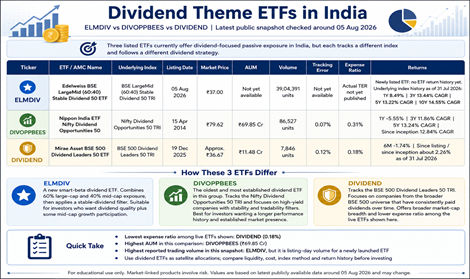
DP
Written by
Dr Pankaj Nandlal Tardeja
Pediatrician and Neonatologist, Al Ain , Abu Dhabi, UAE
Editorial Standards & Research Methodology →