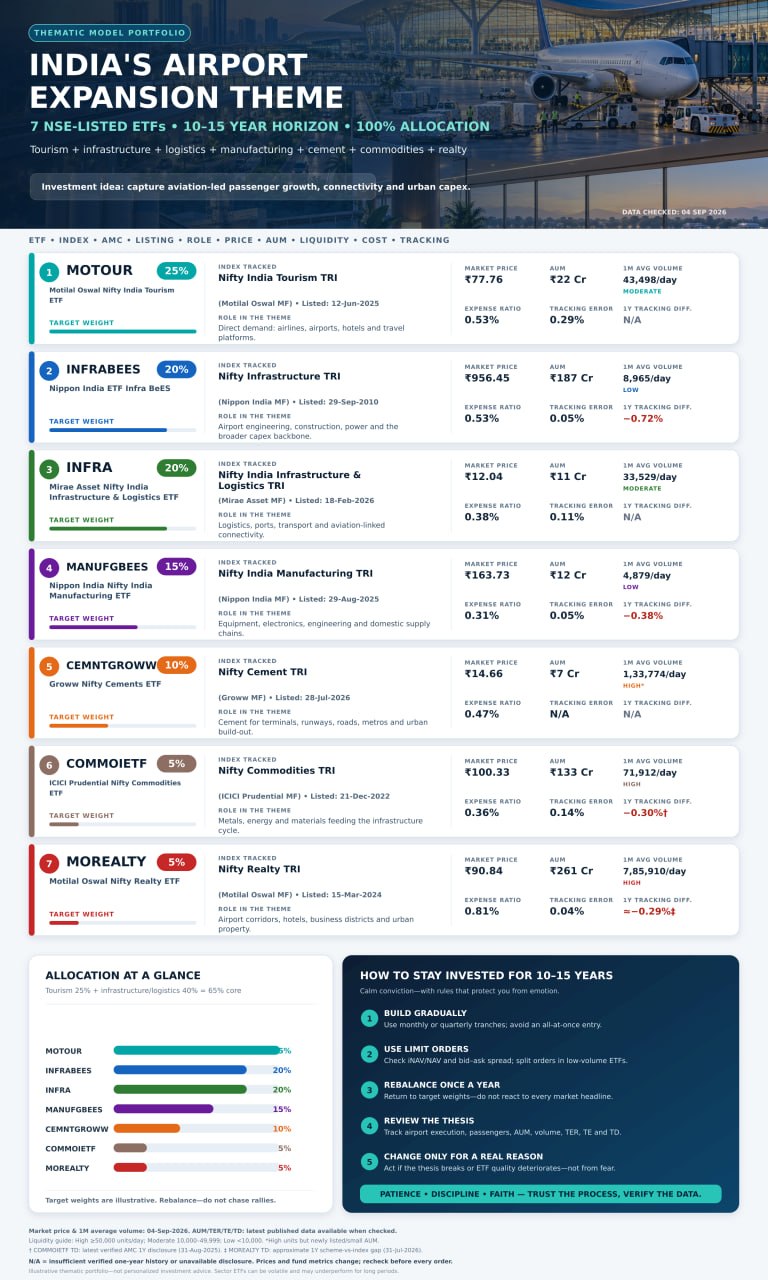
India’s plan to develop about 100 additional airports over the coming decade may create a long-term opportunity across aviation, tourism, infrastructure, logistics, manufacturing, cement, commodities and real estate. Instead of depending on one company, this seven-ETF portfolio spreads the theme across direct beneficiaries and supporting industries. It requires a 10–15-year horizon and acceptance of significant market volatility.
Suggested Allocation
MOTOUR – 25%: Motilal Oswal Nifty India Tourism ETF, tracking the Nifty India Tourism Total Return Index. The principal direct exposure to airlines, airports, hotels, travel and rising passenger traffic.
INFRABEES – 20%: Nippon India ETF Nifty Infrastructure BeES, tracking the Nifty Infrastructure Total Return Index. The established infrastructure core covering major companies involved in national development.
INFRA – 20%: Mirae Asset Nifty India Infrastructure & Logistics ETF, tracking the Nifty India Infrastructure & Logistics Total Return Index. Provides focused exposure to construction, capital goods, power, logistics, cement and transportation.
MANUFGBEES – 15%: Nippon India Nifty India Manufacturing ETF, tracking the Nifty India Manufacturing Total Return Index. Covers industrial equipment, engineering and manufacturing businesses supporting airport development.
CEMNTGROWW – 10%: Groww Nifty Cements ETF, tracking the Nifty Cement Total Return Index. Adds direct exposure to cement demand arising from runways, terminals and connected infrastructure.
COMMOIETF – 5%: ICICI Prudential Nifty Commodities ETF, tracking the Nifty Commodities Total Return Index. Represents metals, materials, energy and other essential inputs.
MOREALTY – 5%: Motilal Oswal Nifty Realty ETF, tracking the Nifty Realty Total Return Index. A small indirect allocation to airport-linked commercial development, hotels, warehousing and airport-city projects.
Proceeding with Patience, Discipline and Faith
The two infrastructure ETFs together form 40%, while Tourism receives the largest individual allocation at 25%. Invest the planned amount gradually through 12 equal monthly purchases instead of trying to predict the perfect market level. Use limit orders, particularly in newer or lower-volume ETFs, and compare the traded price with indicative net asset value before buying.
Review and rebalance the allocation once annually. Ordinary corrections should not disturb a sound 10–15-year plan; however, patience must not become blind faith. Reassess the portfolio if airport execution materially weakens, ETF liquidity deteriorates, tracking difference remains persistently high, or a scheme is merged or closed. Avoid borrowed money and emergency savings. Ideally, keep this concentrated theme to about 20‑30% of the overall equity portfolio.
This is an educational, high-risk thematic illustration and not personalized investment advice or an assurance of returns.