The ETF performance snapshot from 1 month to 3 years gives a useful lesson: market leadership keeps changing. In the short term, EV, Auto, IT, Internet and Realty ETFs have shown stronger momentum. Over six months, global technology exposure through the Nasdaq 100 and Defence ETFs has stood out. Over the longer period, Silver ETFs have dominated the 1-year and 3-year return tables, while Gold continues to remain an important commodity diversifier. The first learning is that no sector remains the leader forever. Investors often become attracted to the latest winner because of excitement, fear of missing out or greed. The opposite happens during corrections, when fear and impatience can lead to selling at the wrong time. Market leadership rotates, so both patience and discipline are important. ETFs can be a simple way to participate in a broad index, sector, theme, commodity or international market without selecting individual stocks. However, an ETF should not be selected only because it has recently delivered the highest return. Before investing, one should check the underlying index, date of listing, assets under management, trading volume and liquidity, expense ratio, tracking error or tracking difference, and whether the ETF suits the investor's risk profile and time horizon. A practical approach is to keep broad-market ETFs as the core of a portfolio and use sectoral, thematic, commodity or international ETFs more selectively as satellite allocations. Sector ETFs can offer strong opportunities, but they also carry concentration and timing risk. Rather than frequently shifting from one top-performing ETF to another, investors may consider staggered investing and periodic portfolio review. The snapshot also shows why comparing different time periods matters. A strong 1-month performer may simply be benefiting from short-term momentum, while a 1-year or 3-year leader may reflect a much larger market cycle. Performance should therefore be studied together with valuation, sector outlook, liquidity and portfolio role. The main takeaway is simple: do not panic during temporary underperformance and do not blindly chase recent winners. Good ETF investing is less about finding today's number-one performer and more about building a diversified, low-cost and liquid portfolio, then reviewing it patiently as market cycles change. Note: This is an educational review for general information and is not investment advice. Investors should do their own research and consider professional advice where appropriate.
Back to Blog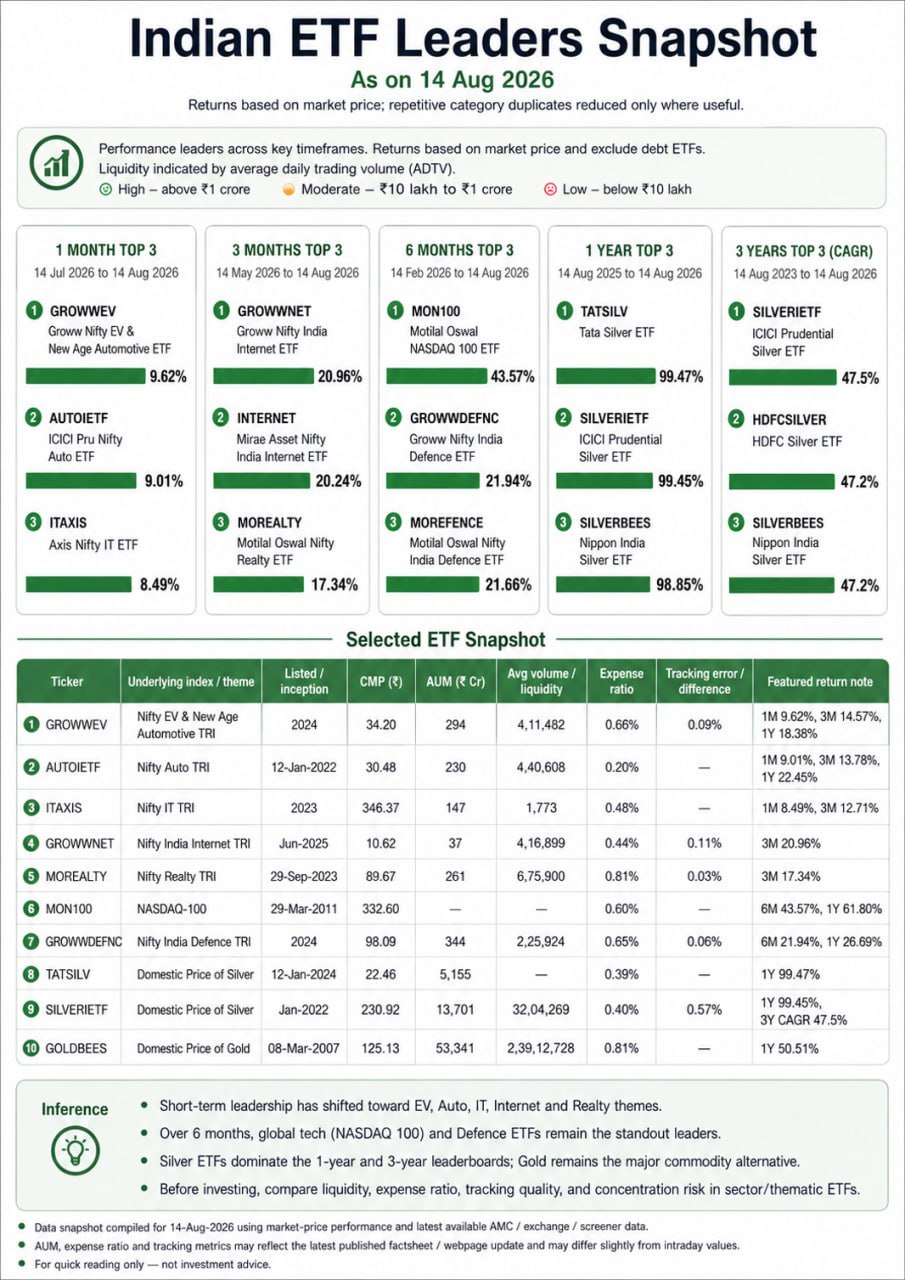
DP
Written by
Dr Pankaj Nandlal Tardeja
Pediatrician and Neonatologist, Al Ain , Abu Dhabi, UAE
Editorial Standards & Research Methodology →