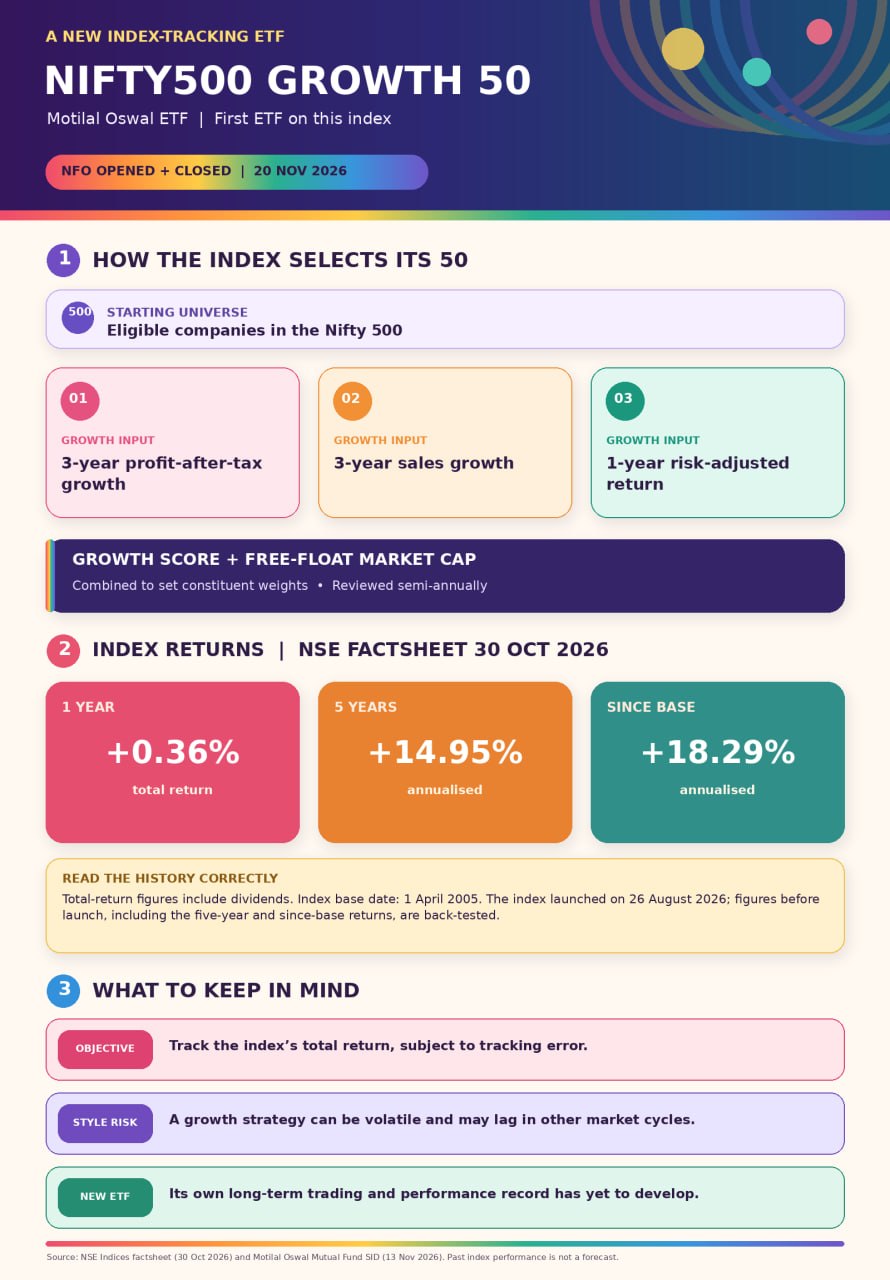
Growth 50 Index. Its new fund offer opened and closed on 20 November 2026. The scheme aims to correspond closely to the index’s total return, subject to tracking error; it does not assure a particular result.
The index begins with eligible companies in the Nifty 500 and selects 50 using a combined growth score based on three-year profit-after-tax growth, three-year sales growth and one-year risk-adjusted return. Each selected company’s weight reflects both its growth score and free-float market capitalisation. The index is reviewed semi-annually. It is therefore a rules-based growth strategy, not simply a list of India’s 50 largest companies by market value.
The NSE Indices factsheet dated 30 October 2026 reports total-return-index performance of 0.36% over one year, 14.95% annualised over five years and 18.29% annualised from the 1 April 2005 base date. Total-return figures include dividends. The index launched on 26 August 2026, so performance before that date—including the five-year and since-base figures—is historical back-tested data, not a live record for the ETF.
The ETF has only just completed its NFO, so it has no long-term market track record of its own. Once listed, investors can assess its traded price, liquidity, costs and tracking difference. A growth-focused index may fall sharply and can lag when other investment styles lead; past index returns do not predict future results. Consider the risk and investment horizon before investing.
Sources: NSE Indices Nifty500 Growth 50 index information and factsheet dated 30 October 2026; Motilal Oswal Mutual Fund Scheme Information Document dated 13 November 2026. All performance figures above are index returns, not ETF returns.